Fakhar Zaman: From Pakistan Navy to Pakistan's Match-Winner
How Fakhar Zaman Started His Cricket Journey
In the history of cricket, only a handful of players have managed to rise to fame almost overnight, with luck seemingly shining in their favor. One such example is Shahid Khan Afridi, who announced himself on the international stage by scoring a breathtaking 102 runs off just 37 balls against Sri Lanka early in his career.
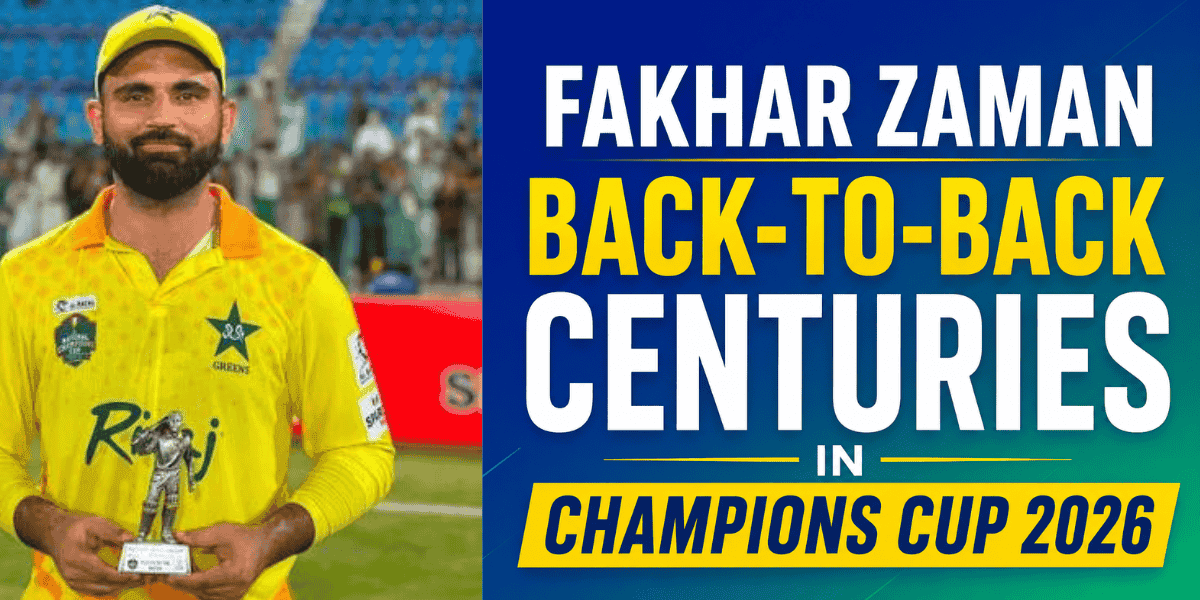
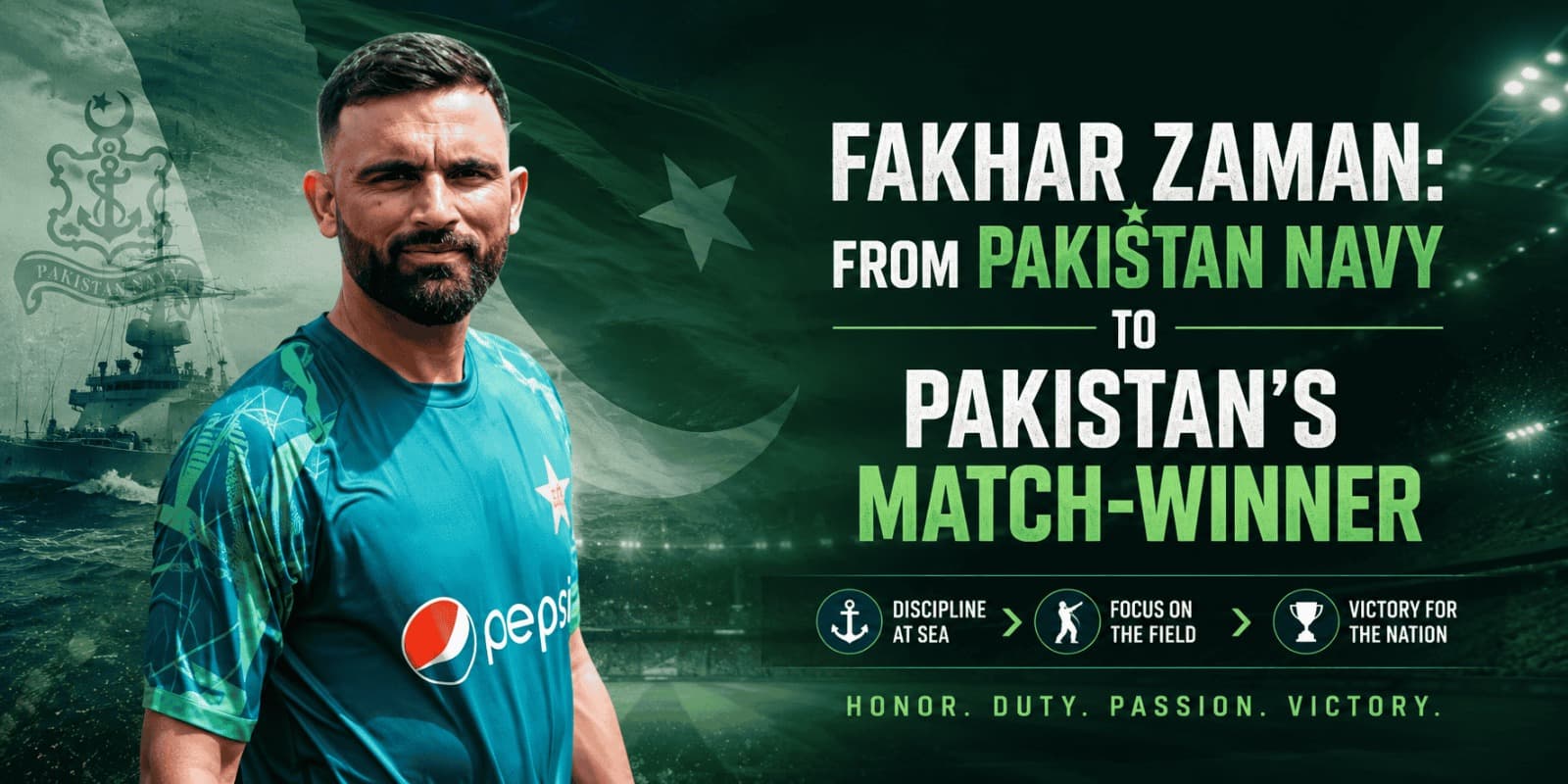
Another player who made a remarkable impact on Pakistan cricket is opening batsman Fakhar Zaman, who is also known within the team as "Fauji" because of his background in the Pakistan Navy.
After leaving the Pakistan Navy in 2013, Fakhar Zaman began his domestic cricket career. He made his first-class debut for Karachi Blues in 2013 and later represented Khyber Pakhtunkhwa in 2016. He did not have to wait long for his international opportunity. In 2017, he made his T20I debut against the West Indies.
The Champions Trophy Made Him a Star
Soon after, Fakhar was selected for Pakistan's squad for the ICC Champions Trophy in June 2017. Initially, he had to wait on the bench, but after Ahmed Shehzad's poor form and Pakistan's defeat against India in the group stage, Fakhar was given an opportunity in the playing XI. He immediately made an impression with his outstanding performances.
However, Fakhar Zaman truly reached the heights of fame in the Champions Trophy final against India. He scored a magnificent century in the final, helping Pakistan defeat their arch-rivals in a memorable fashion. Fakhar was named Player of the Match for his brilliant performance.
Following the tournament, Fakhar became a regular member of Pakistan's ODI team. He went on to create history by becoming the fastest Pakistani batsman to reach 1,000 ODI runs, a record that still stands. In 2018, he also became the first Pakistani batsman to score a double century in ODI cricket, achieving the feat against Zimbabwe and surpassing Saeed Anwar's previous record of 194 runs.
Fakhar also produced another memorable performance against South Africa, scoring 193 runs during a remarkable run chase.
The Innings That Showed What Fakhar Can Do
The 2023 Cricket World Cup in India provided yet another unforgettable chapter in Fakhar Zaman's career. In a crucial match against New Zealand, Pakistan were chasing a massive target of 403 runs under immense pressure, with a packed Indian crowd adding to the intensity of the occasion.
Fakhar responded with an incredibly fearless and aggressive innings. He smashed an unbeaten 126 runs from just 81 balls, including eight fours and eleven sixes, guiding Pakistan to a memorable victory through the DLS method. His extraordinary performance earned him the Player of the Match award.
During that innings, Fakhar created several records. His eleven sixes were the most hit by a Pakistani batsman in a single World Cup innings. His century, which came off just 63 balls, was also the fastest World Cup century by a Pakistani batsman at that time.
Fakhar Zaman is undoubtedly one of Pakistan's most exciting and aggressive batsmen. With his fearless approach and attacking style, he has helped Pakistan win several important matches. However, his aggressive style of batting may also be one of the reasons why he has not yet made his Test debut. Perhaps Test cricket was simply not the format he was destined for.
Nevertheless, there is no doubt that Fakhar Zaman is one of Pakistan's finest opening batsmen and a genuine match-winner. Over the past few years, frequent changes in the PCB management, team leadership, and captaincy have also resulted in repeated changes to Fakhar's position in the batting order. This has affected his consistency to some extent.
Despite these challenges, Fakhar Zaman remains a dangerous and highly valuable batsman for Pakistan. On his day, he has the ability to change the course of a match single-handedly—and that fearless, attacking approach is what makes him one of Pakistan's most exciting match-winners.
Spotted an error in this article? Let us know via our corrections page. Read about how we work in our editorial policy.